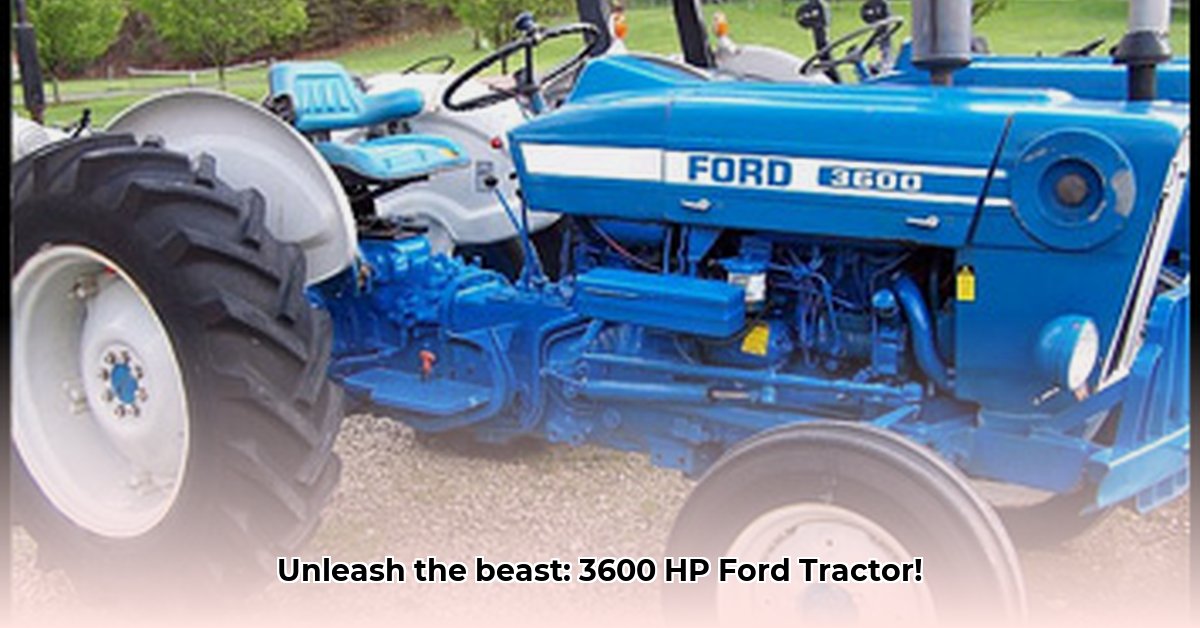
The Ford 3600, a stalwart of agricultural history produced between 1975 and 1981, offers a unique proposition for today's farmers. While significantly less powerful than modern counterparts, its robust build, relative simplicity, and lower initial cost make it a compelling option for specific applications, particularly within the context of sustainable agriculture. This guide provides a comprehensive overview, addressing technical specifications, maintenance, parts sourcing, potential upgrades, and a cost-benefit analysis to help you determine if a Ford 3600 is the right fit for your farm. For more information on classic Ford tractors, check out this helpful resource: Ford tractor specs.
Technical Specifications and Performance Overview
The Ford 3600 boasts a straightforward design, offering a reliable, albeit modest, power output. Horsepower ranged from 45 to 48, depending on the engine (gasoline or diesel). This is significantly less than modern tractors, often exceeding 100 horsepower. The weight, ranging from 3846 to 5590 lbs, contributes to stability, particularly beneficial for pulling heavy loads. However, this weight also leads to higher fuel consumption compared to modern, lighter models. Transmission options included a 6-speed and an 8-speed mechanical transmission; considerably less sophisticated than modern continuously variable transmissions (CVTs).
How does it compare to modern machines? Consider this:
| Specification | Ford 3600 HP | Modern Tractor (Example) |
|---|---|---|
| Horsepower | 45-48 hp | 100+ hp |
| PTO (Power Take-Off) Power | 35-40 hp | 70+ hp |
| Weight | 3846-5590 lbs | 8,000 - 12,000 lbs (or More) |
| Transmission | 6-speed or 8-speed mechanical | Continuously Variable Transmission (CVT) or Advanced Mechanical |
| Fuel Efficiency | Significantly lower | Substantially higher |
| Emission Standards | Does not meet modern standards | Meets stringent emission regulations |
Isn't it interesting to see how much progress has been made in tractor technology? This highlights the 3600’s limitations but also its niche applications.
Maintenance and Repair: Ensuring Longevity
Maintaining a Ford 3600 requires a hands-on approach. Regular maintenance is essential to extend its lifespan and avoid costly repairs.
Oil Changes: Change the engine oil and filter every 50 operating hours (or as per your owner's manual). Using the correct oil weight is crucial for engine longevity. Ignoring this can lead to significant engine damage.
Filter Replacements: Regularly replace air, fuel, and hydraulic filters to prevent blockages and maintain peak performance. A dirty air filter alone can reduce engine power by 10-15%.
Fluid Level Checks: Frequently check engine oil, coolant, transmission fluid, and hydraulic fluid levels. Low levels can lead to catastrophic damage.
Troubleshooting: Common problems include electrical issues (aging wiring), fuel system blockages, and hydraulic leaks (worn seals). The owner's manual and online forums provide invaluable resources.
Safety First: Always disconnect the battery's negative terminal before working on electrical components. Always wear appropriate safety gear (gloves, safety glasses, hearing protection).
Parts Sourcing and Availability: The Quest for Components
Finding parts for a Ford 3600 can be challenging. Here’s how to approach it:
- Online Marketplaces: Explore online marketplaces (eBay, specialized agricultural equipment sites).
- Salvage Yards: Check local salvage yards that specialize in vintage tractors.
- Specialized Dealers: Contact dealers specializing in parts for classic tractors.
- Online Forums: Join online forums dedicated to Ford 3600 tractors; the collective knowledge of owners can be invaluable.
Modernization and Upgrades: Enhancing Performance
While significant upgrades are unlikely cost-effective, some improvements can boost efficiency and safety:
- Modern Lighting: Upgrade to LED lights for improved nighttime visibility and safety.
- Biodiesel Compatibility: Explore the possibility of using biodiesel fuel, but verify compatibility with your engine first.
- Seat Upgrade: Replace the original seat with a more comfortable and ergonomic aftermarket seat to improve driver comfort and reduce fatigue.
Cost-Benefit Analysis: Weighing the Investment
The initial cost of a used Ford 3600 is significantly lower than that of a new tractor. However, ongoing maintenance, repair, and fuel costs must be factored into your decision. While the lower purchase price is appealing, a higher fuel consumption rate and the potential for costly repairs necessitate a comprehensive cost-benefit analysis. Compare the total cost of ownership (fuel, maintenance, repairs) over several years to similar figures for a modern tractor. This will help you determine if the Ford 3600 remains financially viable for your operations. Remember to factor in the value of simplicity and low-tech repair.
Case Studies: Real-World Applications
The Ford 3600 remains a valuable tool for various agricultural tasks, particularly on smaller farms or for niche applications not requiring high horsepower. Its sturdy build and easy maintenance make it a dependable asset for tasks like hauling, light tillage, and operating PTO-driven implements. Given the right applications, a well-maintained 3600 can offer significant savings over the total cost of owning and operating a modern tractor for more specialized tasks.
Conclusion: A Timeless Workhorse
The Ford 3600 isn't a replacement for a modern tractor but rather a niche addition. Its simplicity and ruggedness might appeal to environmentally conscious farmers committed to repair and a reduced reliance on advanced technology. Careful consideration of your needs, a realistic assessment of maintenance costs, and a deep dive into parts sourcing are crucial before making a purchasing decision. If you're willing to embrace vintage farming and the related challenges, the Ford 3600 can still be a reliable, cost-effective asset.